Design · History · Illustration
Selling the War: How Graphic Design Mobilized Nations
In 1914, the outbreak of the First World War forced the world’s great powers—Britain, France, Russia, Germany, and Austria-Hungary—into a massive communication crisis. Almost overnight, governments urgently needed to recruit millions of volunteers, raise staggering sums of money to finance the war machine, and convince the public that the impending bloodshed was a righteous and winnable cause.
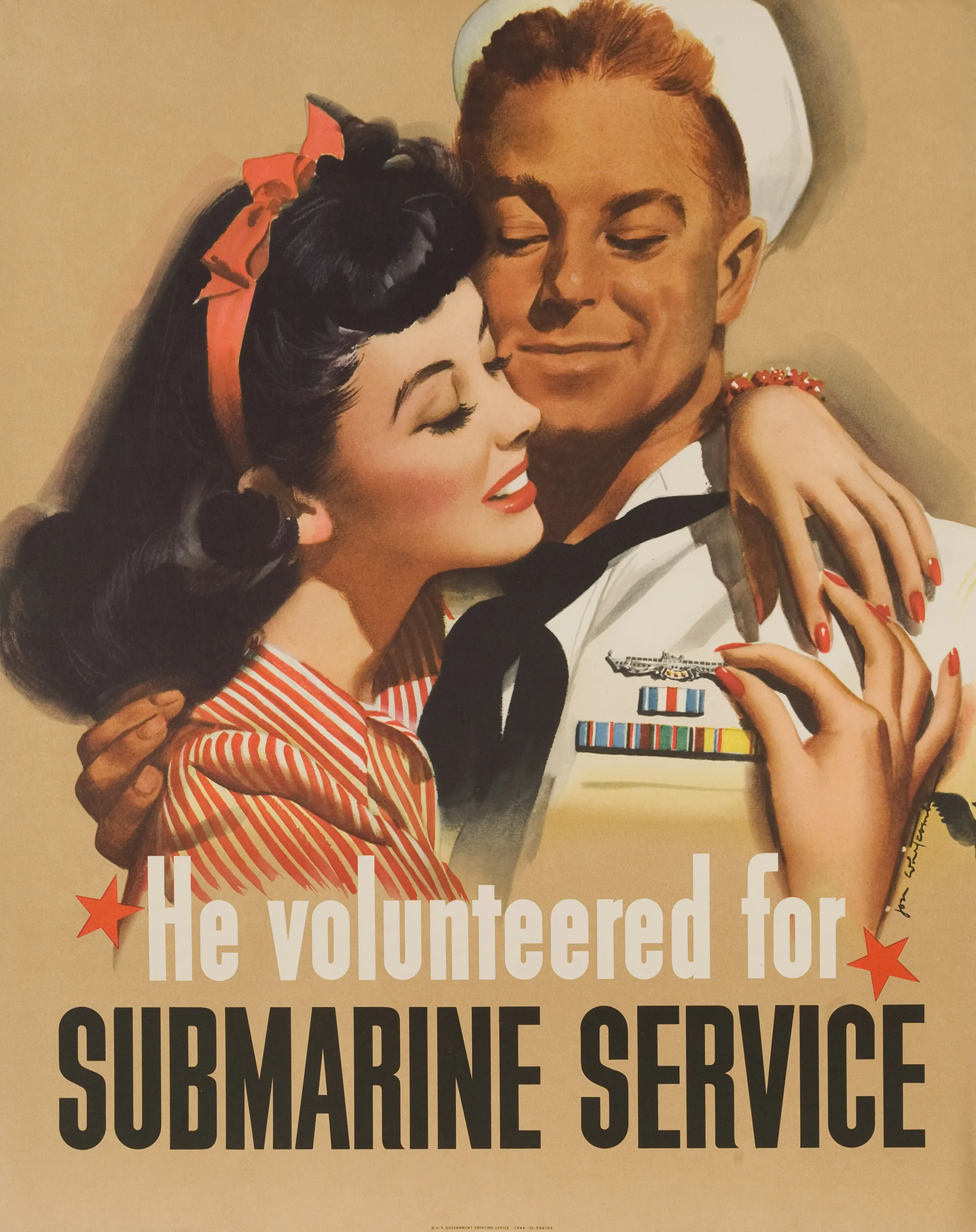
At the dawn of the conflict, widespread radio, television, and the internet did not exist. Instead, the military leadership relied on the rapidly advancing technological landscape of the printing industry. Thanks to leaps in color lithography achieved during the Belle Époque, cost-efficient mass printing was readily available to blanket the cities of the world.
The printed poster and using it for Propaganda became the undisputed king of mass communication. Functioning as the radio, television, and internet combined, graphic design was deployed to the front lines. The aesthetic explorations of Art Nouveau and the Arts and Crafts movements were abruptly set aside, and the poster was mobilized to alter public psychology on a global scale.
Realism and the Pointing Finger: The Allied Strategy
The Allied forces, particularly Great Britain and the United States, approached this unprecedented communication challenge through the lens of traditional, narrative realism. Instead of pushing aesthetic boundaries, the British, French, and American governments favored literal illustrations that appealed directly to emotion, patriotism, and traditional societal roles.
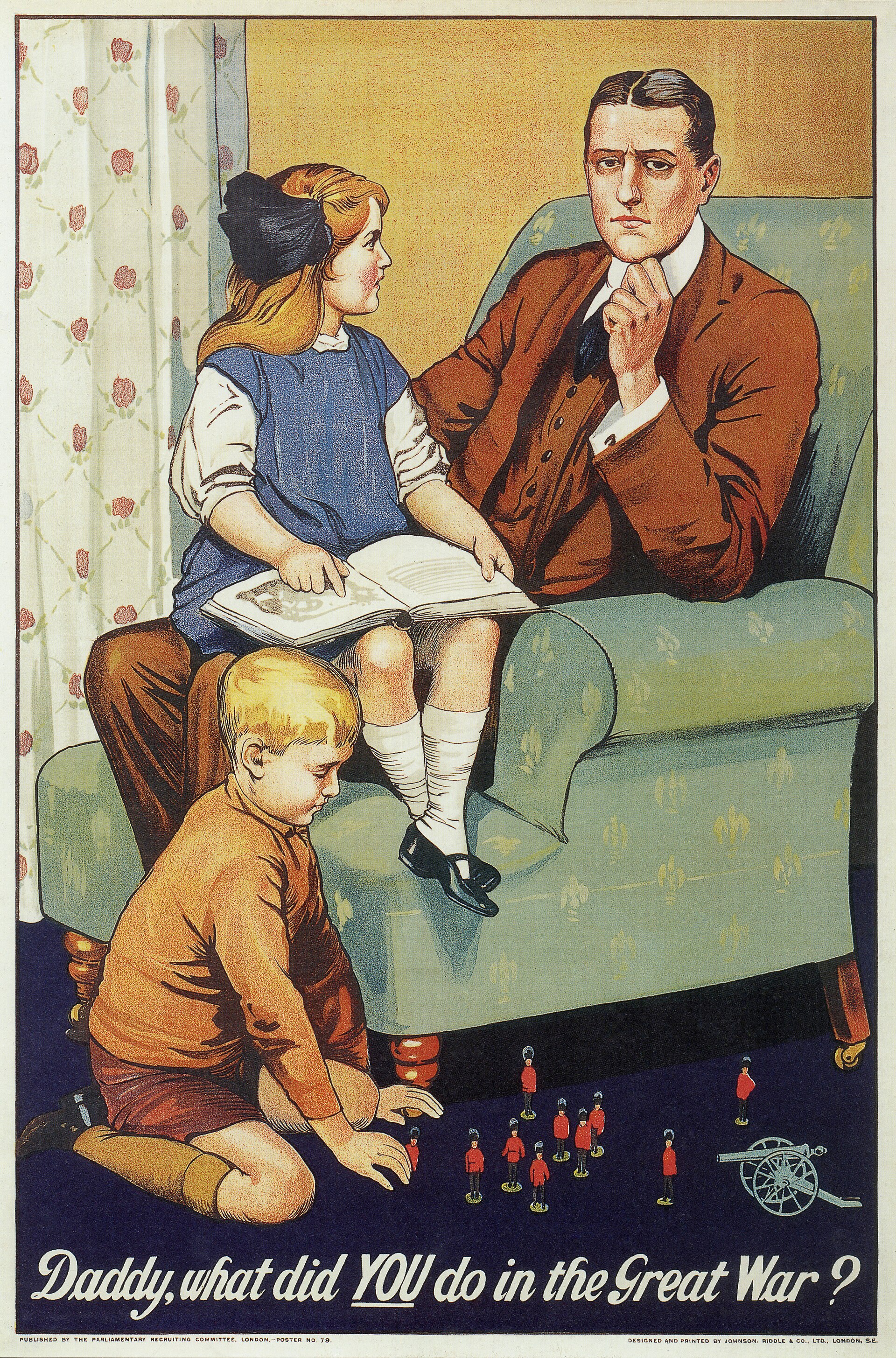
British posters frequently relied on messages of home, family, and masculinity, effectively utilizing guilt as a psychological tool. Consider Savile Lumley‘s famous 1914 poster, “Daddy, what did YOU do in the Great War?“. It depicts a comfortable father sitting in an armchair after the war, staring blankly as his children ask him about his military service. This was calculated emotional blackmail, directly questioning a man’s honor and masculinity if he chose to stay safely at home rather than enlist.
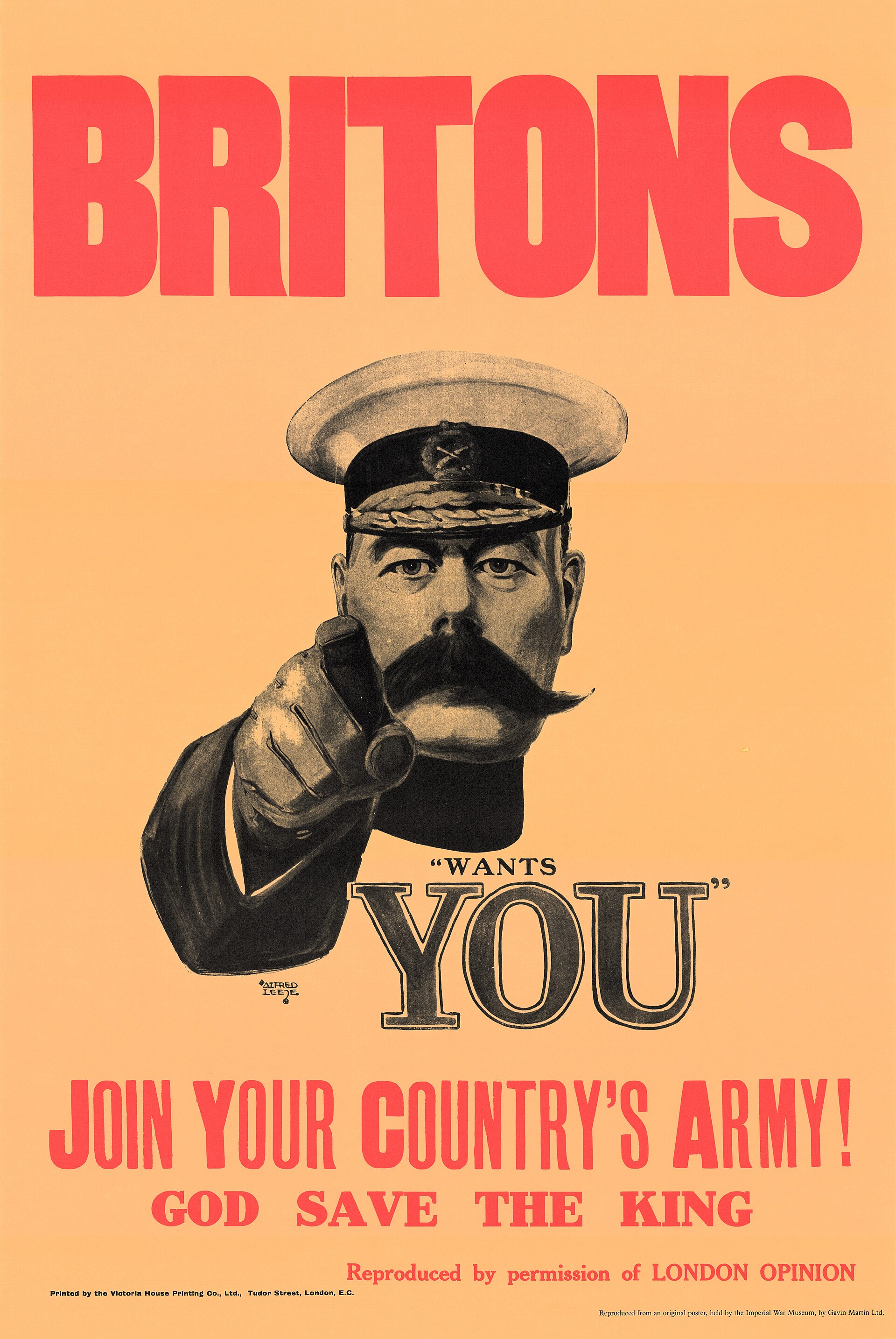
The Allies also perfected the confrontational gaze. Alfred Leete‘s iconic 1914 design featuring Lord Kitchener, the British Secretary of War, pointing a stern, oversized finger directly at the viewer above the text “Wants YOU“, set a formidable new standard for mass persuasion.
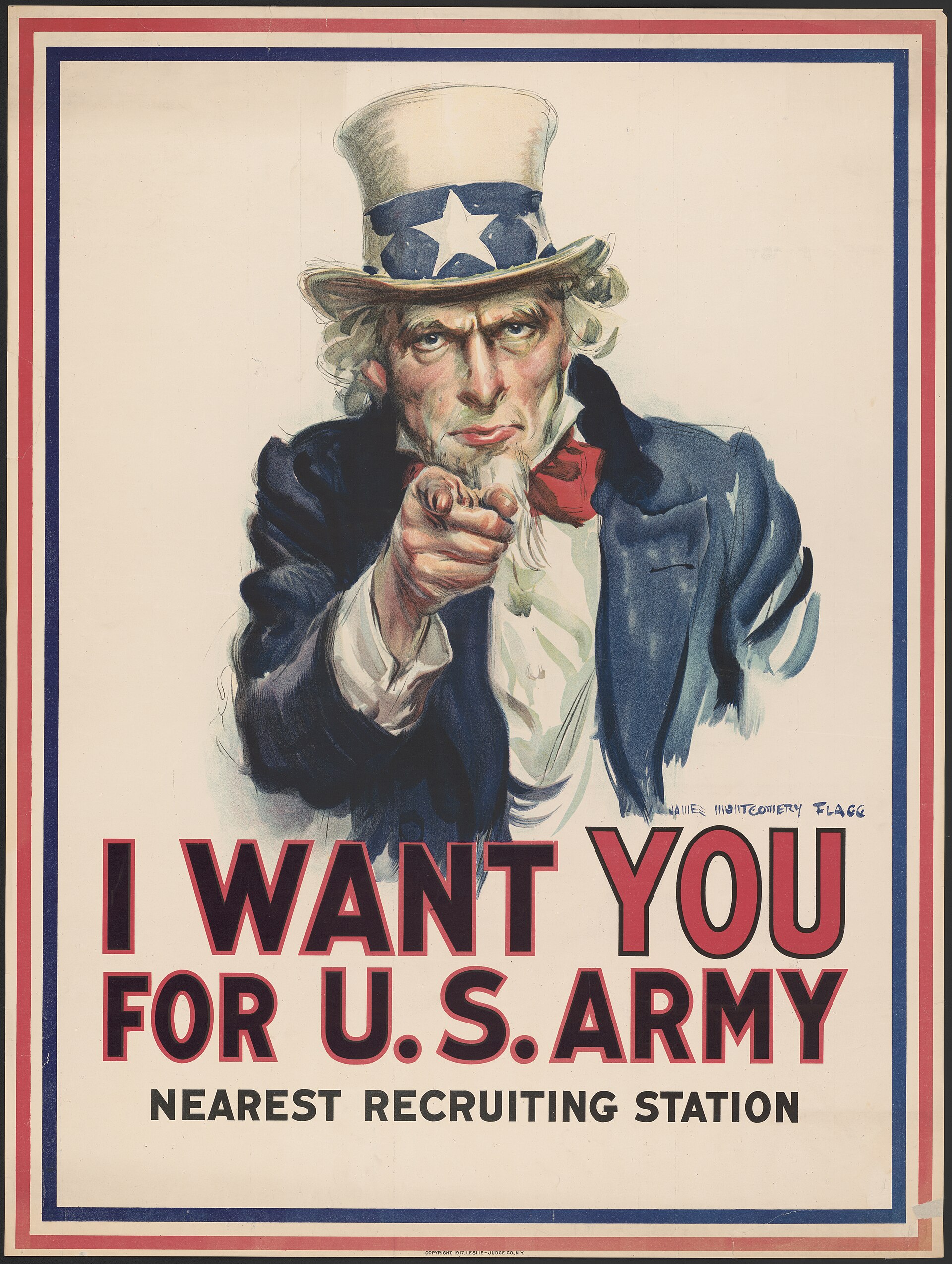
When America entered the conflict, the illustrator James Montgomery Flagg adapted this exact pointing-finger composition for an American audience. His 1917 poster, “I Want You for U.S. Army“, featured a self-portrait of Flagg dressed as a commanding Uncle Sam. Unlike the British designs, the American posters were stark, direct, and straightforward. Uncle Sam looks directly into the eyes of the public and commands them to act. Over four to five million copies were printed and distributed across the country, making it one of the most widely reproduced posters in human history.
These literal designs lacked avant-garde sophistication, but they proved the raw, undeniable power of direct psychological manipulation.
The Cold Abstraction of Plakatstil
Across the trenches, the Central Powers took a radically different aesthetic path. Instead of the sentimental, illustrative realism of the Allies, German and Austro-Hungarian designers relied on the reductive simplicity of Plakatstil (the poster style). Continuing the structured traditions of the Vienna Secession, this approach integrated words and images into simplified, powerful shapes. Pioneered by figures like Lucian Bernhard and Hans Rudi Erdt, Plakatstil utilized flat areas of color, bold typography, and stark pictographic symbols.
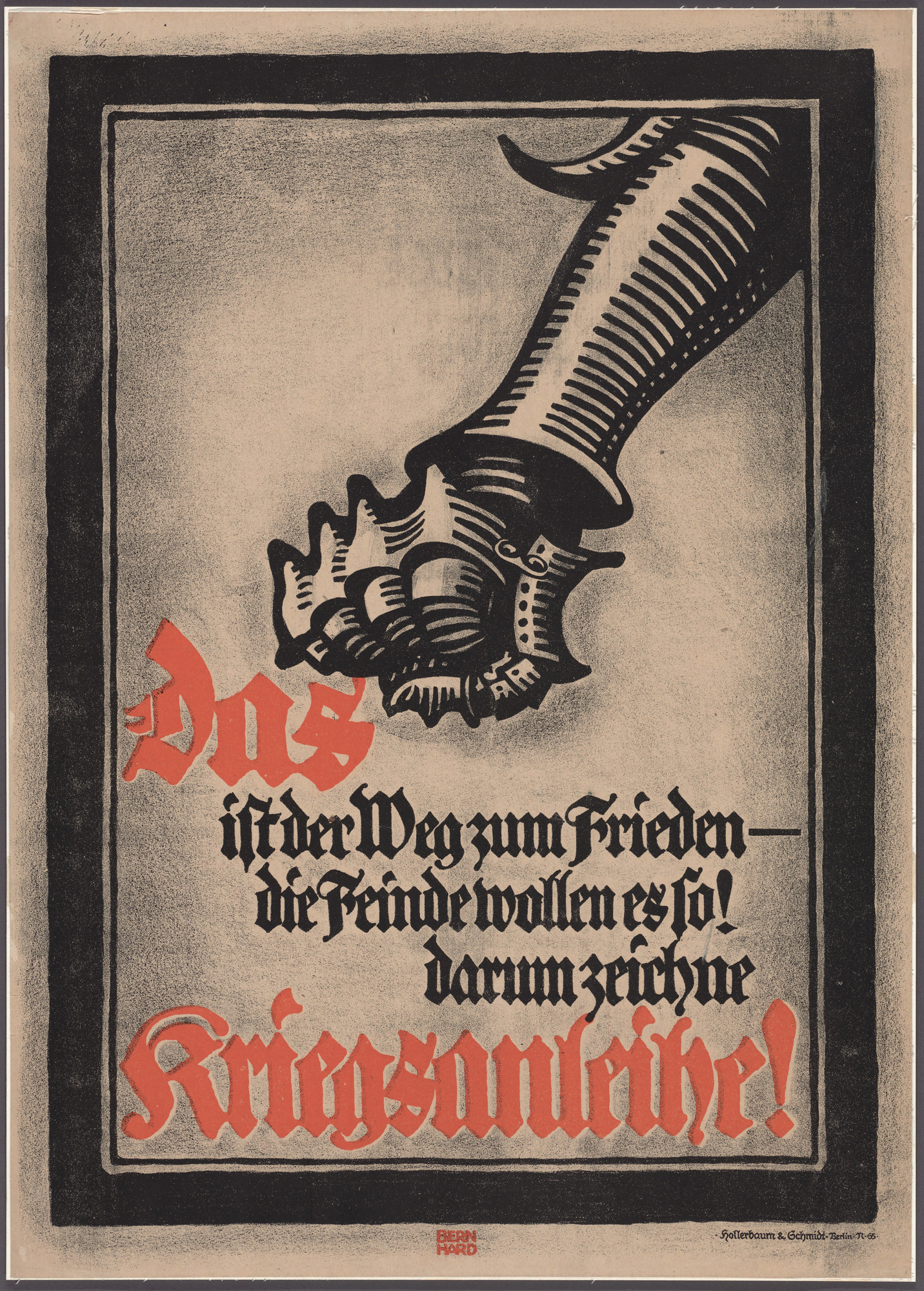
Bernhard’s 1915 poster for the Seventh War Loan campaign is a masterpiece of this cold, calculated philosophy. In an almost primeval expression of ancient Germanic spirit, he depicted a clenched fist enclosed in medieval armor, thrusting outward against a stark background of bold, Gothic typography.
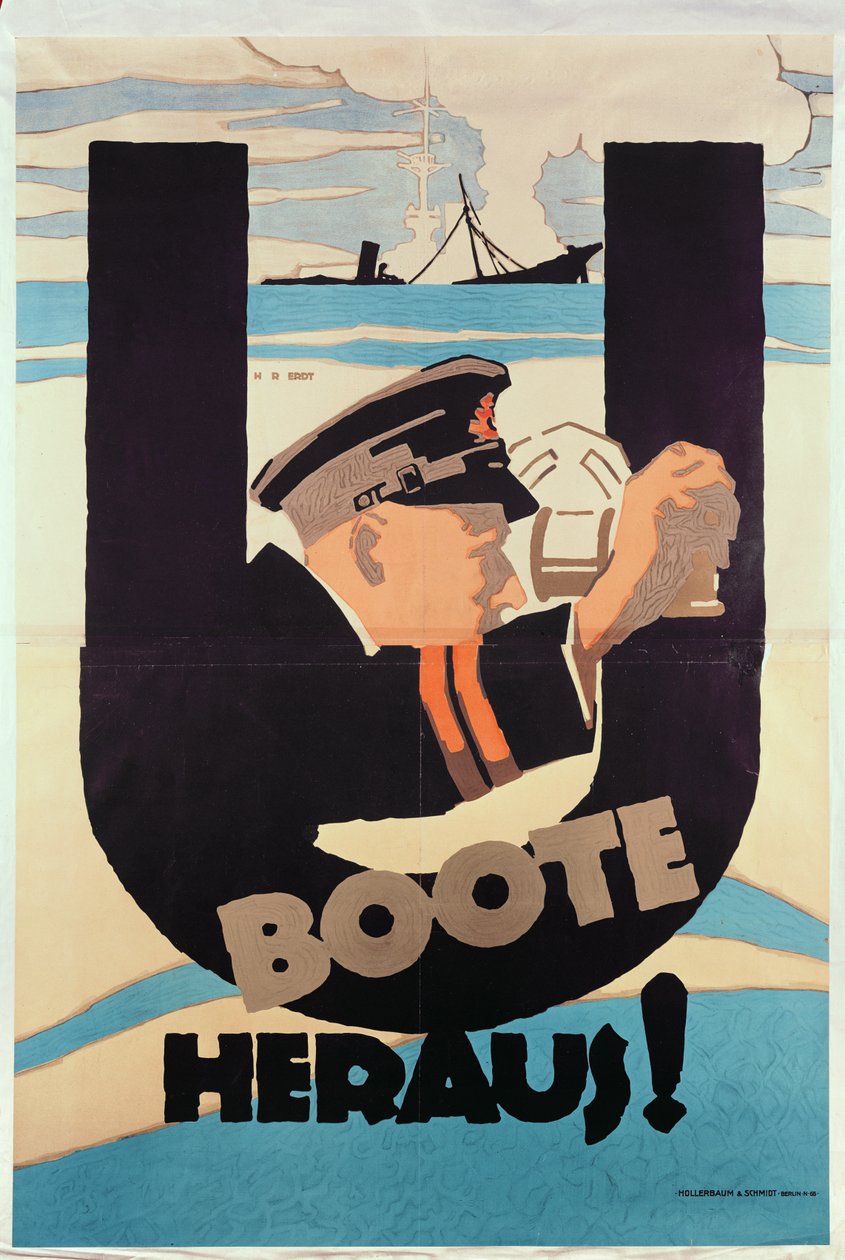
Similarly, Hans Rudi Erdt’s poster U-Boats Out! (c. 1916) used the massive, structural shape of a sans-serif “U” to frame an abstract, stylized submarine commander, integrating the image and hand-drawn text into one unified message.
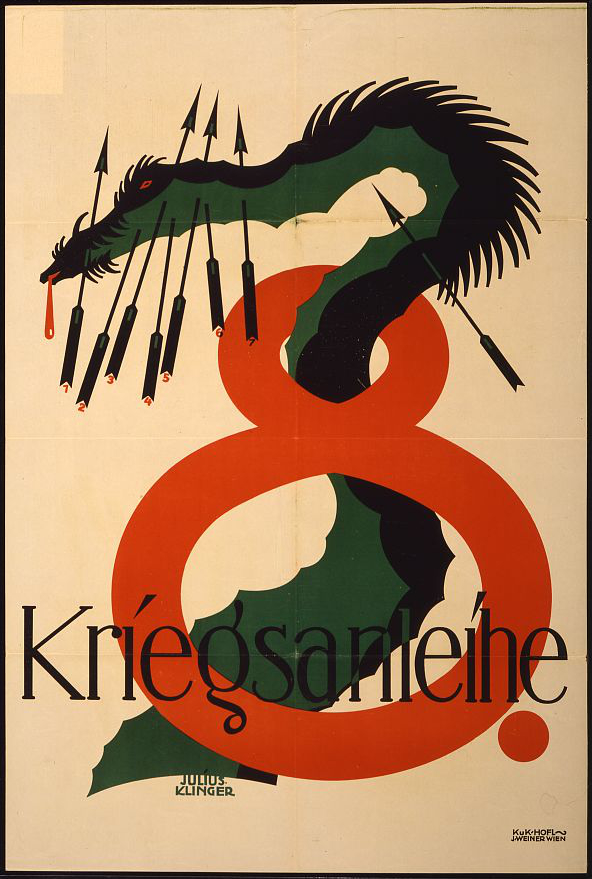
Designer Julius Klinger employed flat symbols to express complex ideas, such as using eight arrows piercing a wounded dragon to represent the nation’s eighth bond drive. The German approach demonstrated that complex political ideas could be distilled into bold, abstract visual signs. They were aesthetically brilliant, tightly composed, and visually striking. Yet, despite their formal perfection, this abstraction lacked realism and ultimately failed to carry the deep, visceral emotional impact of the Allies’ pointing fingers and weeping children.
Designing Democracy: Modernism Goes to War
By the time the Second World War erupted, the global aesthetic battle lines had shifted dramatically. In Nazi Germany, the propaganda machine controlled by Joseph Goebbels deliberately rejected the avant-garde modernism of the 1920s. Seeking to project a narrative of Aryan supremacy and vilify enemies, Hitler preferred traditional, idealized, heroic realism.
The Allies, conversely, embraced the very European modernism that the fascist regimes had attempted to crush. As visionary designers fled the chaos of Europe for the United States, they brought with them the advanced visual languages of cubism, constructivism, and the Bauhaus. During the war, the U.S. Office of War Information recognized the communicative power of these movements and commissioned artists to create intense, modernist graphic statements.
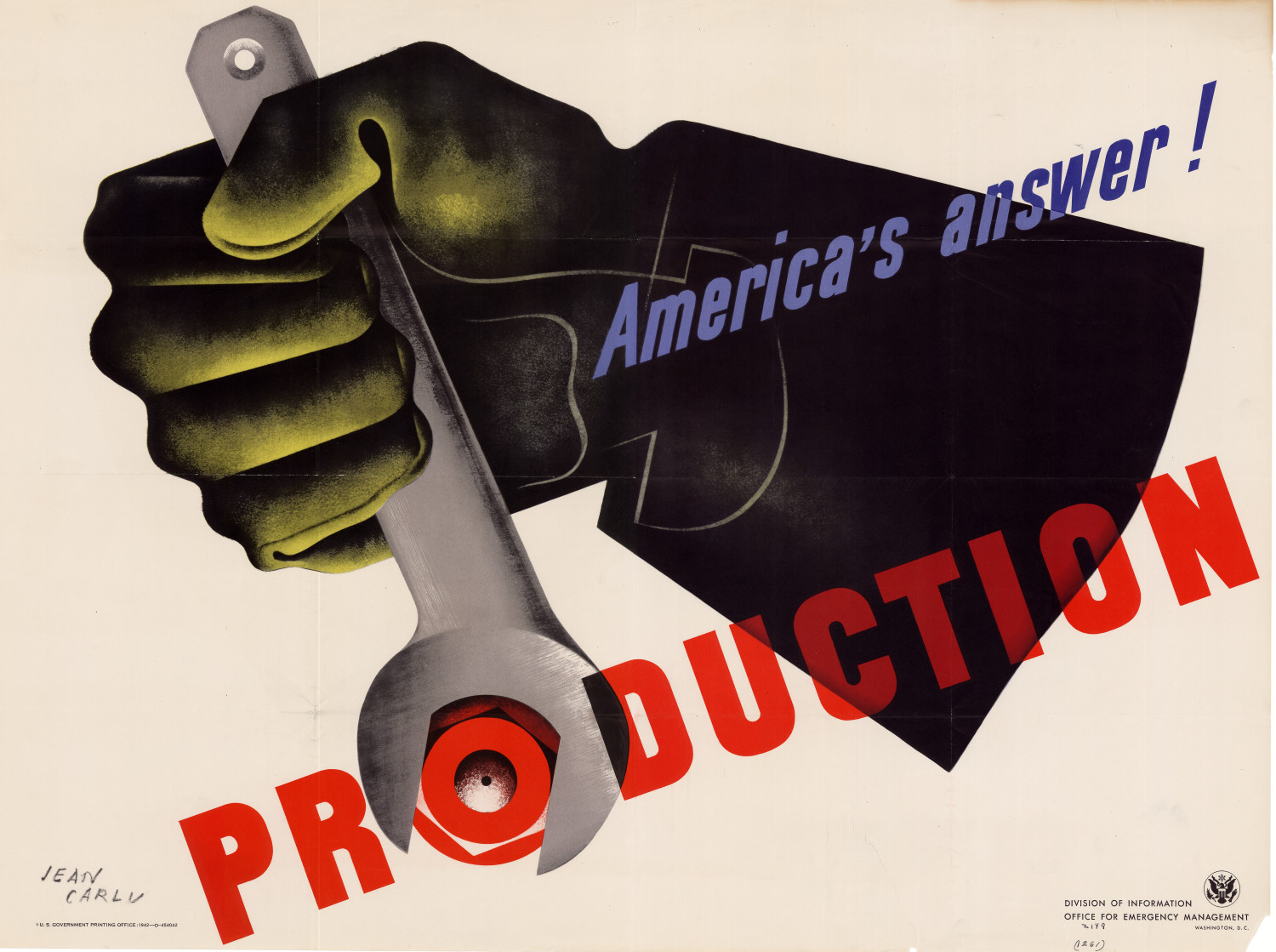
The French immigrant Jean Carlu designed one of the era’s most powerful pieces: America’s Answer! Production (1942). Carlu interlocked a massive steel wrench and a stylized, geometric hand into a single, undeniable symbol of industrial labor and urgency.
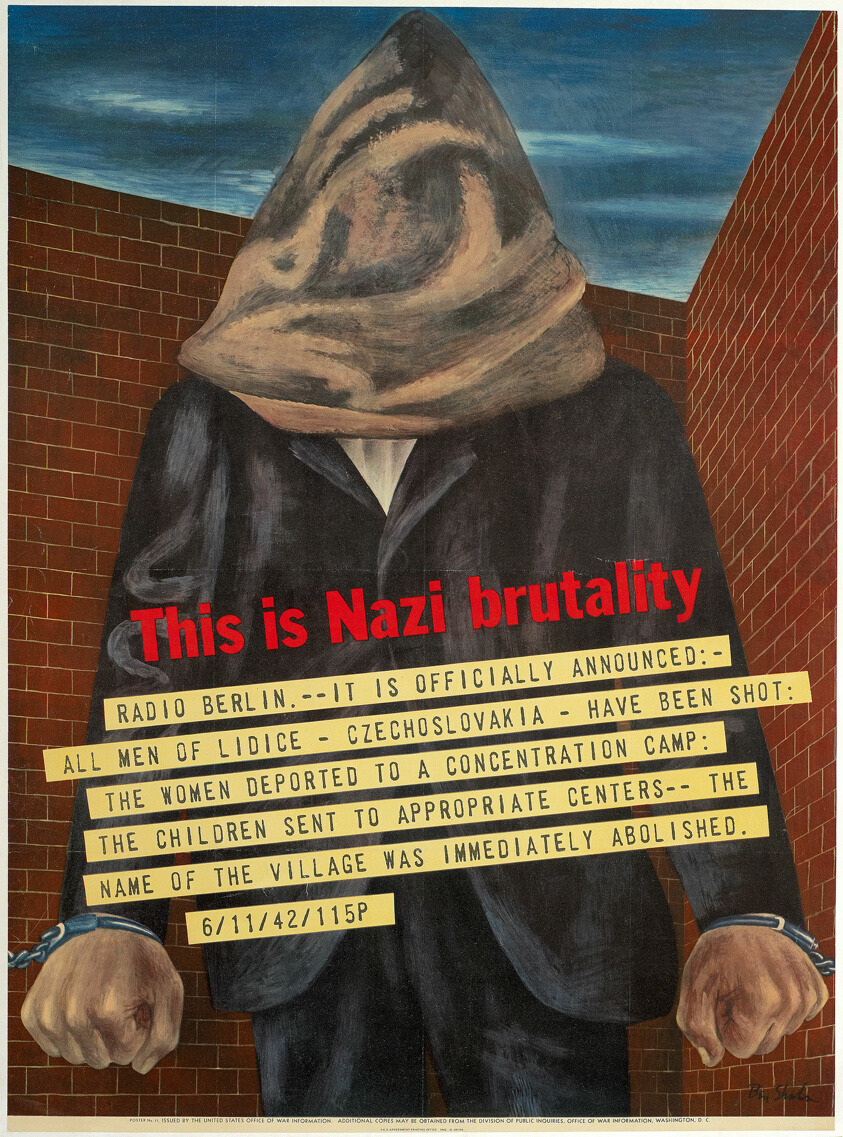
The social realist Ben Shahn created the haunting “This is Nazi brutality” (1943). By placing a rough, agonizing sketch of a shackled figure against a stark backdrop resembling an urgent telegram, Shahn bypassed traditional sentimental illustration. Instead, he relied on a documentary-like visual harshness to deliver a chilling, immediate punch to the American public.
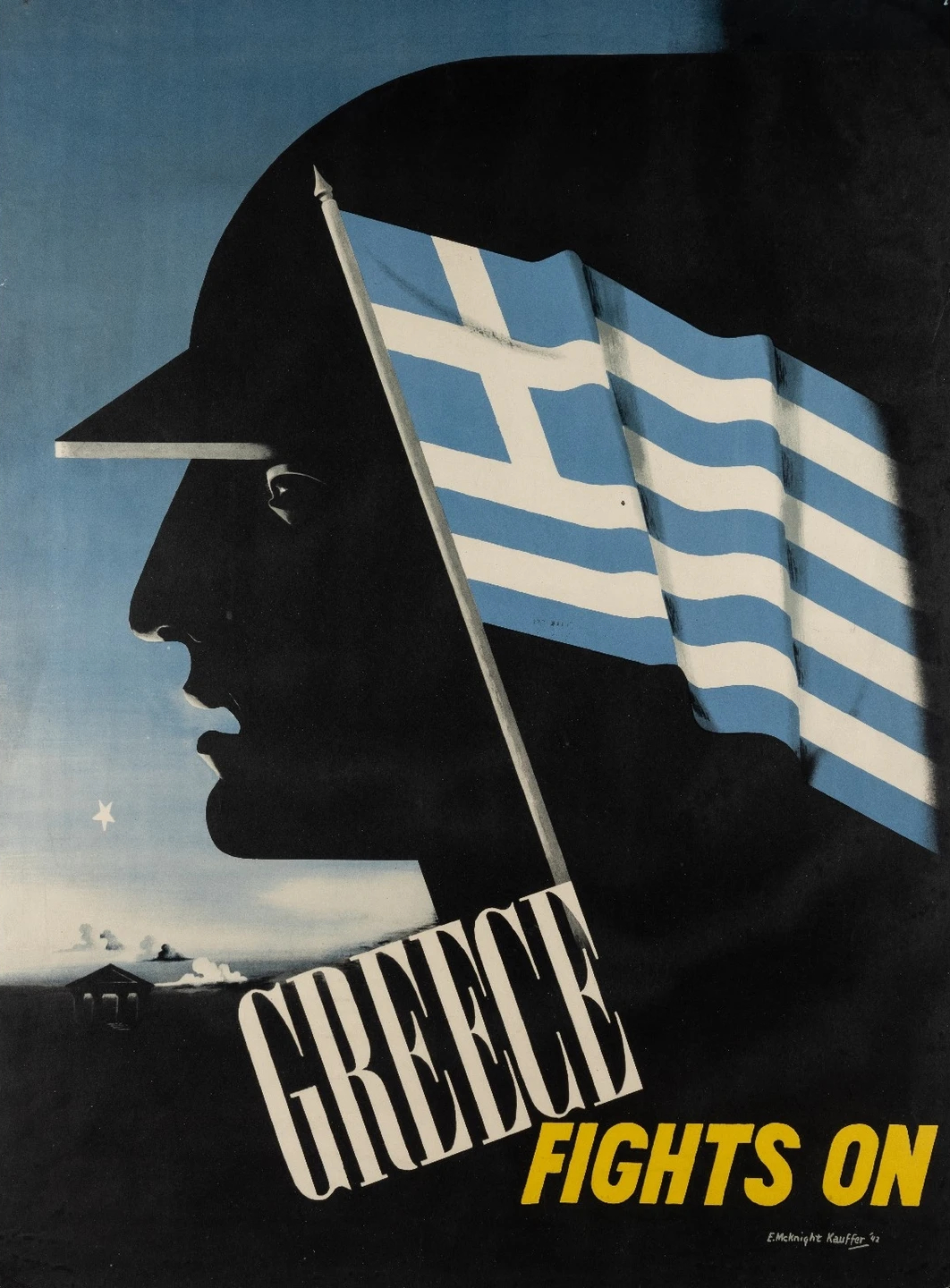
Other designers, like E. McKnight Kauffer, combined classical symbols—such as Hermes, the Greek messenger of the Gods, or ancient Spartan warriors—with the American flag to create potent graphic symbols of Allied unity.
The Allies had learned that modernism wasn’t just an intellectual exercise for avant-garde galleries; it was an incredibly powerful tool for democratic defense, prioritizing intense visual forms and raw urgency over the sentimental illustration of the previous war.
The Legacy of Persuasion
The two global conflicts of the early twentieth century functioned as a massive, tragic proving ground for graphic design. Over three decades, governments had successfully manipulated mass psychology on an unprecedented scale, rallying millions of troops, managing food conservation, and raising billions of dollars using nothing but ink, paper, and targeted visual strategy.
Once peacetime returned, this raw persuasive capacity did not simply vanish. Instead, the designers, the mass-printing technologies, and the psychological tactics were demobilized and handed directly to commerce. The consumer boom of the post-war era inherited a mature, highly effective communication machine. To harness this immense power in a modern, industrial world—and to cure the psychological hangover of global conflict—designers realized they needed a new, objective system of order. They needed universal rules for visual harmony to rebuild society from the ashes of war.
That search for absolute, rational structure leads us directly to 1919 and the ultimate laboratory of modern design: The Bauhaus.
More writing
The Architecture of Information: Swiss Design and the Grid
After World War II, a rapidly globalizing world needed a universal visual language that could cross borders without cultural misunderstandings. Explore how the pioneers of Swiss Design stripped…
Art Directing America: The Golden Age of Editorial Design
In the post-war era, American art directors broke free from traditional grids to turn the printed page into a cinematic, cultural experience. Explore how the visionary minds of…
Designing the Corporation: American Modernism and the Rise of Visual Systems
In the post-war era, American businesses rapidly evolved into massive multinational corporations that demanded rigorous visual order. Explore how modernist designers like Paul Rand and Lester Beall tamed…