Designing the Corporation: American Modernism and the Rise of Visual Systems
In the post-war era, American businesses rapidly evolved into massive multinational corporations that demanded rigorous visual order. Explore how modernist...
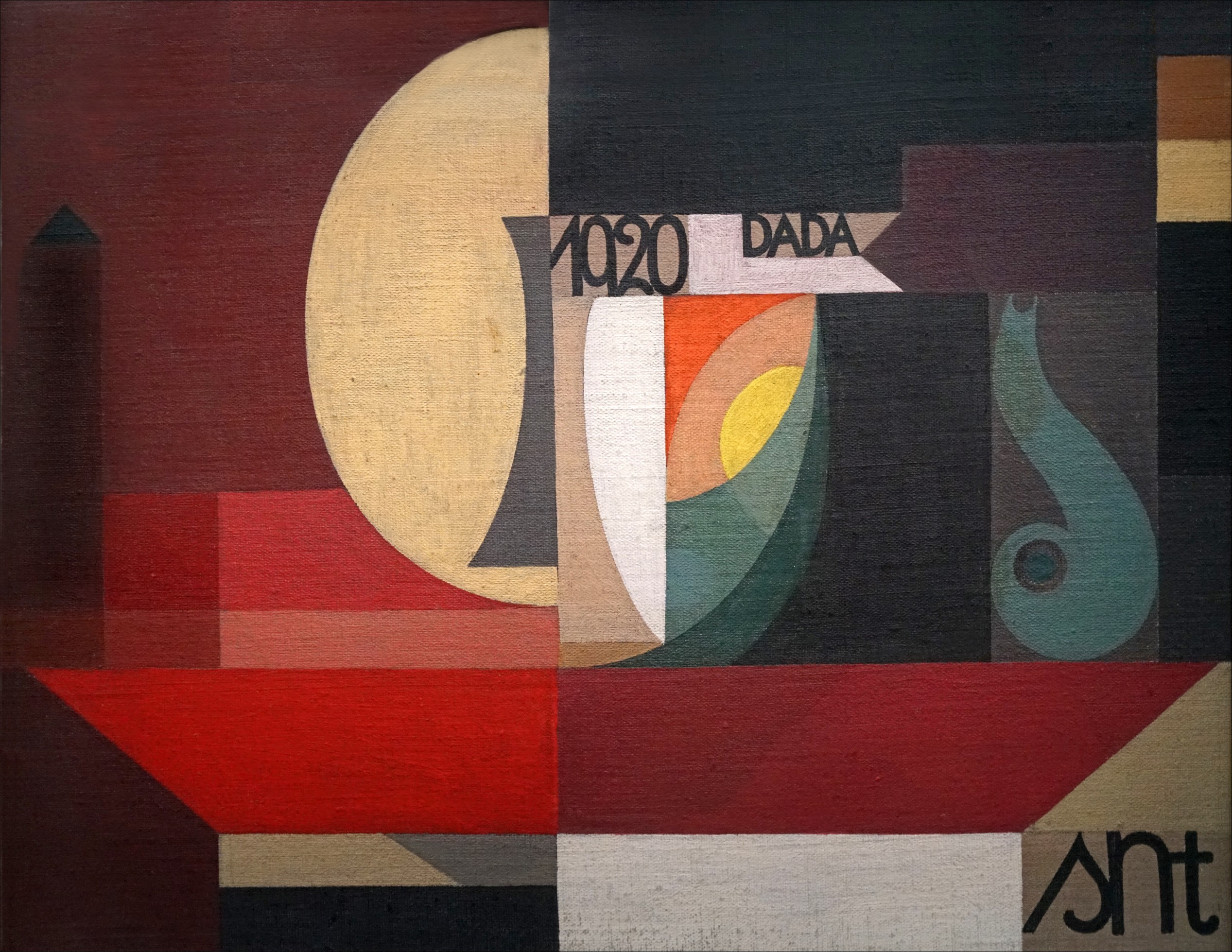
Traumatized by the senseless slaughter of World War I, a rebellious group of anti-war artists completely rejected the harmonious design grids of the past, instead weaponizing scissors, glue, and visual nonsense to invent photomontage and rewrite the rules of visual communication.
In our previous post, we explored how designers in Scotland and Austria painstakingly constructed a beautiful, mathematically perfect design universe. They had successfully tamed the organic clutter of the 19th century, replacing it with the clean, rational order of the modular grid. But as the calendar turned to 1914, the rational, orderly world of the early 20th century collapsed into the blood and mud of the trenches.
The technological machines that designers had hoped would build a harmonious new society were instead turned toward mass slaughter. The logical, orderly grid of the Vienna Secession could no longer explain a world that had seemingly gone mad. Because the established logic and reason had failed humanity, the new generation of artists and designers responded by embracing the irrational.
Here is how the trauma of global war transformed graphic design from a tool of quiet, orderly communication into a weapon of chaotic political protest.
To understand the sheer visual violence of Dadaism, we must first understand the psychological devastation of the First World War.
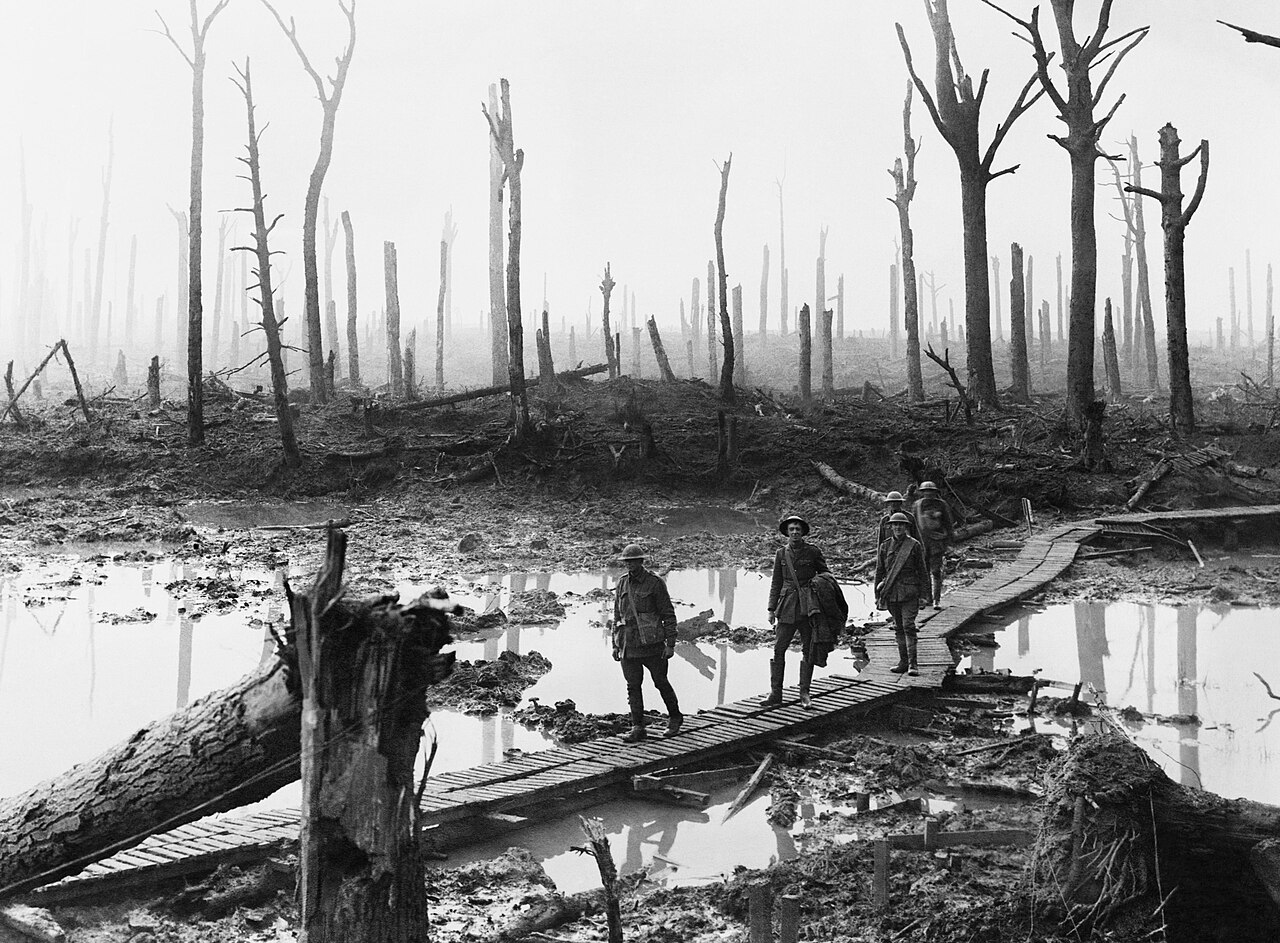
For decades, European society had marched forward on the belief that science, technology, and rational thought were leading humanity toward a utopian future. When the war erupted, that optimism was instantly shattered. Millions of young men were sent to die in a mechanized, senseless conflict orchestrated by the so-called “rational” leaders of the establishment.
For a generation of artists who watched their friends die in the trenches, the very concepts of logic, harmony, and traditional beauty became offensive. How could a designer justify sitting in a quiet studio, calculating the perfect mathematical proportions of a square layout, while the world burned outside?
The answer was simple: they couldn’t. A new visual language was required to express the collective trauma of the era. The pristine, architectural grids of the past were about to be completely dismantled.
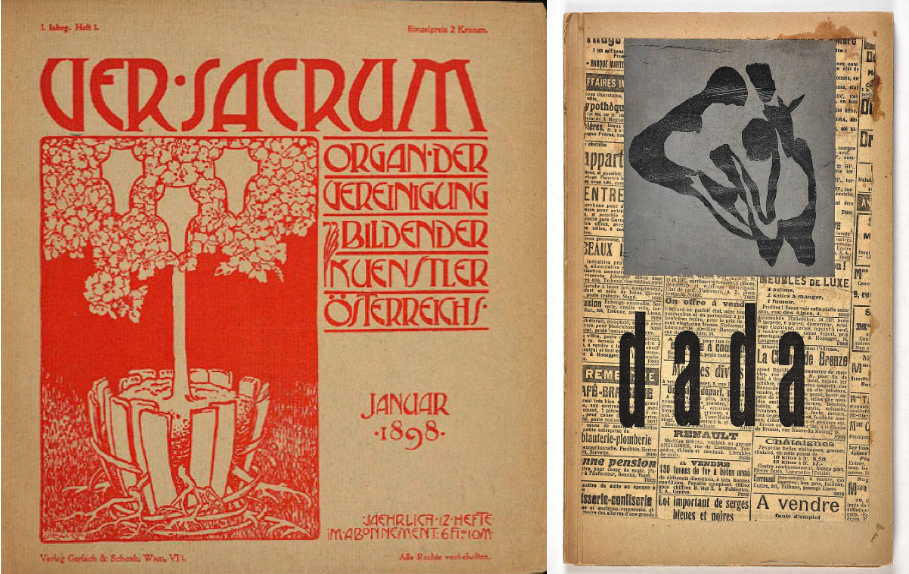
As the war raged across Europe, a group of traumatized, pacifist artists and writers fled to neutral Switzerland. Gathering in Zurich, they launched a radical new movement called Dada.
Dada was not just an artistic style; it was a philosophical protest rooted in absurdity. The Dadaists believed that if society’s “reason” had led to mass slaughter, then the only moral response was to embrace “nonsense.”
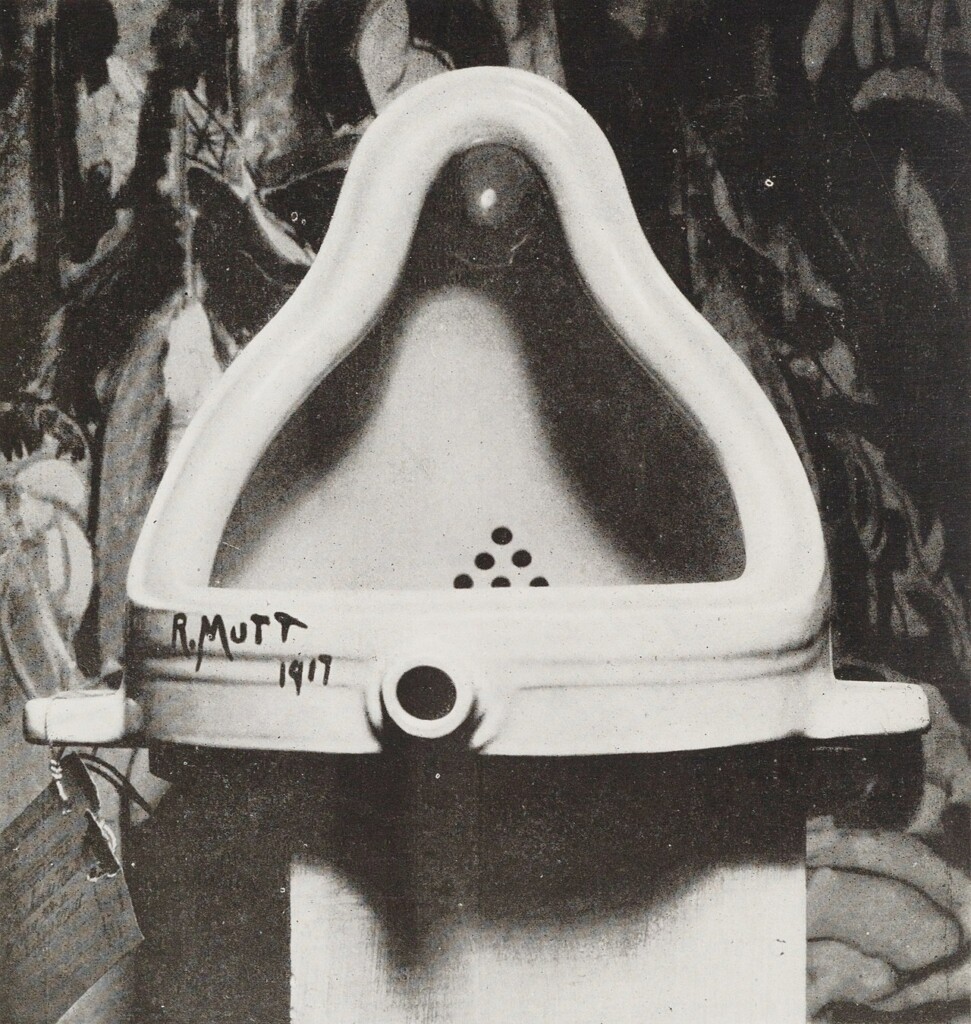
They deliberately declared themselves an anti-art movement. They rejected every traditional standard of good taste, composition, and aesthetic harmony.
It is important to draw a sharp contrast here between the Dadaists and the Italian Futurists (whom we covered in an earlier post).
The Futurists glorified war, speed, and the machine, treating conflict as a great cleansing force.
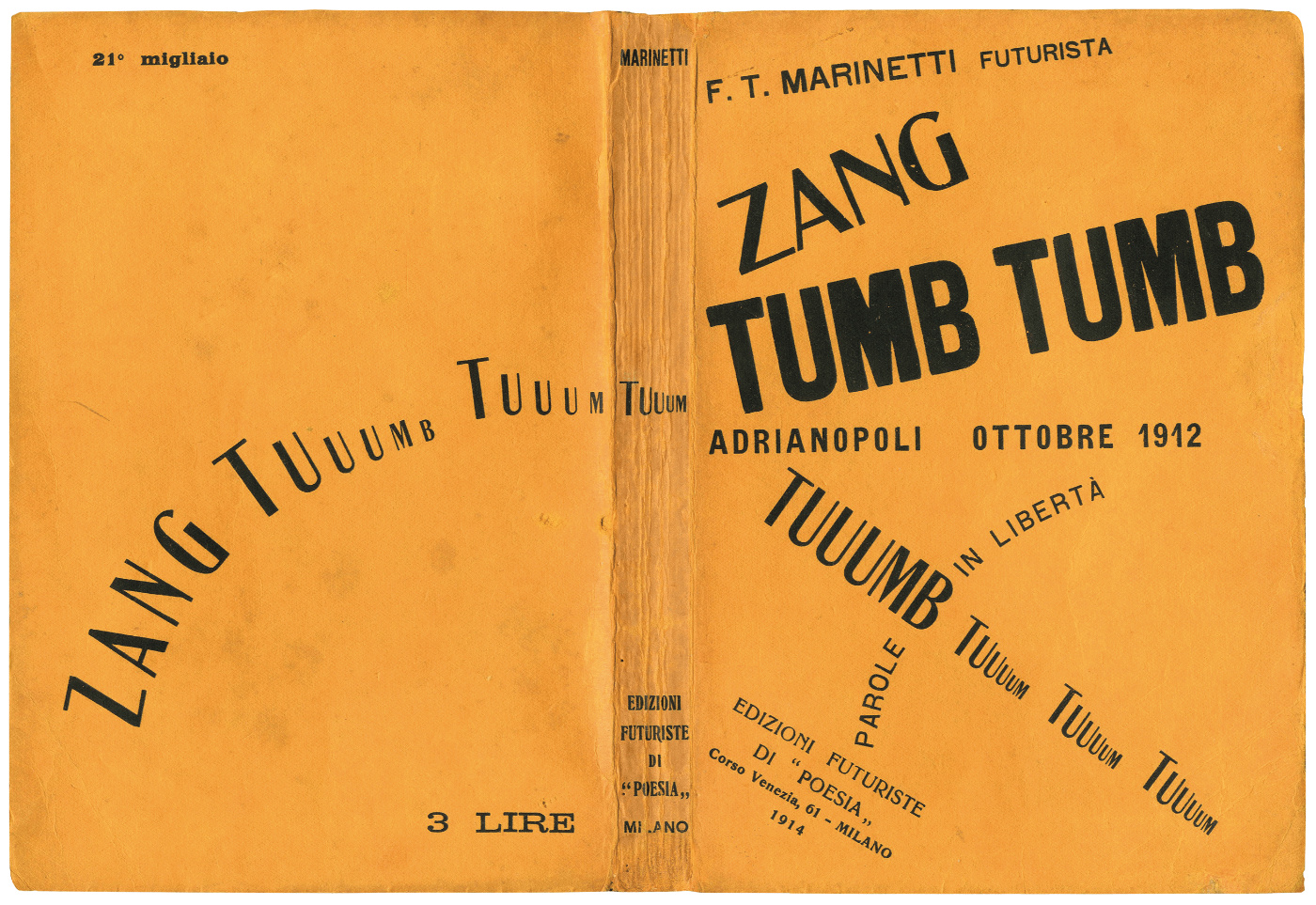
The Dadaists, on the other hand, were deeply traumatized pacifists who hated the war. They did not use chaos to celebrate the modern age; they used chaos to mock it, to shock the complacent public, and to protest the senselessness of the establishment. Dada was dark, biting, and fiercely political.
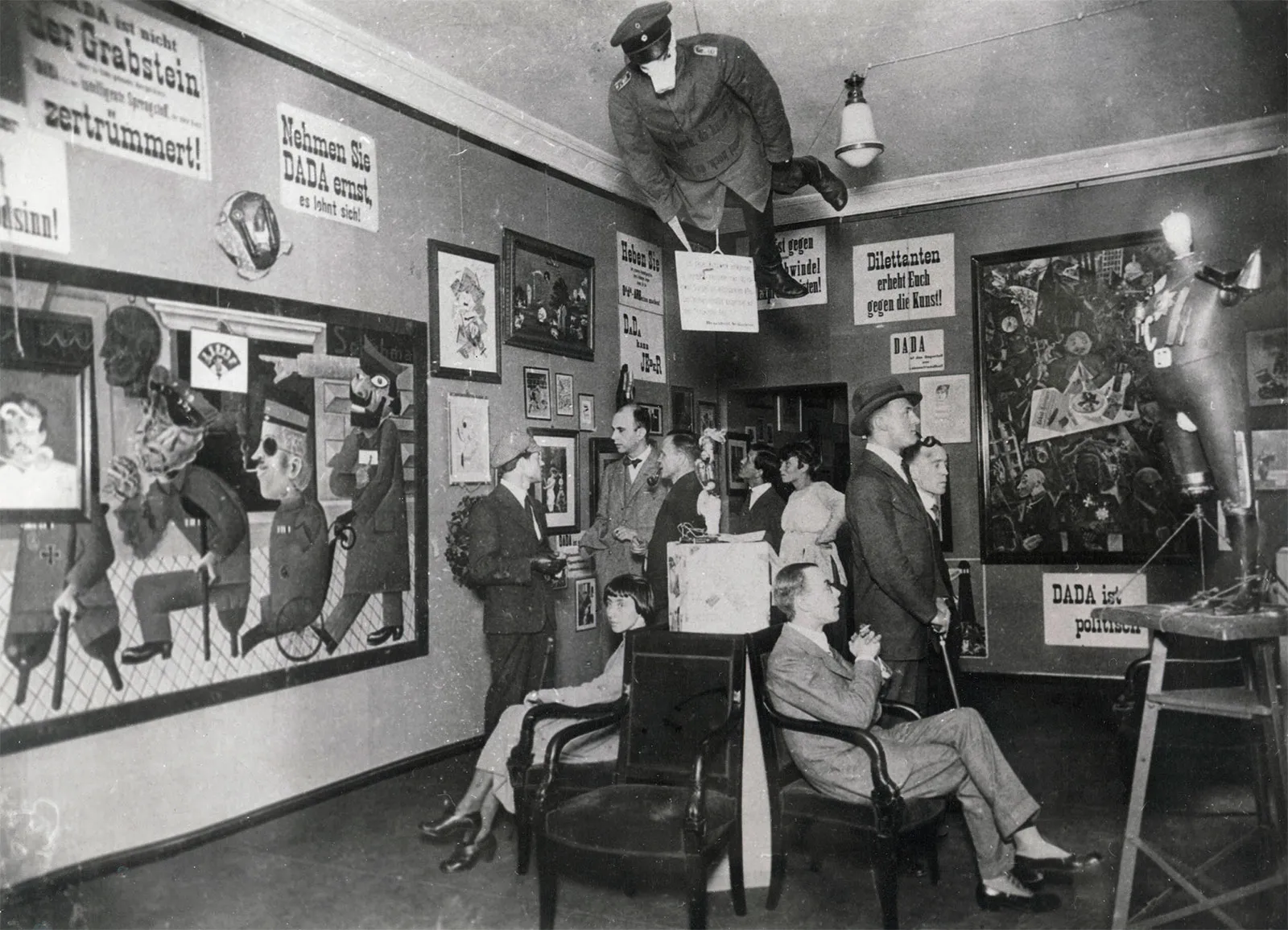
To execute their anti-art rebellion, the Dadaists turned to the printed page. Typography was suddenly pulled out of its quiet, orderly columns and dragged onto the artistic battlefield.
Following the early experiments of avant-garde poets, Dadaist designers realized that typography did not exist solely to be read quietly in a book. Words could be loud. They could be angry. They could be visually explosive.
Designers completely rejected the tyranny of the horizontal line, scattering letters across the page in erratic, diagonal bursts. They mixed heavy, bold, wooden display type with delicate, fragile serifs in the exact same sentence.
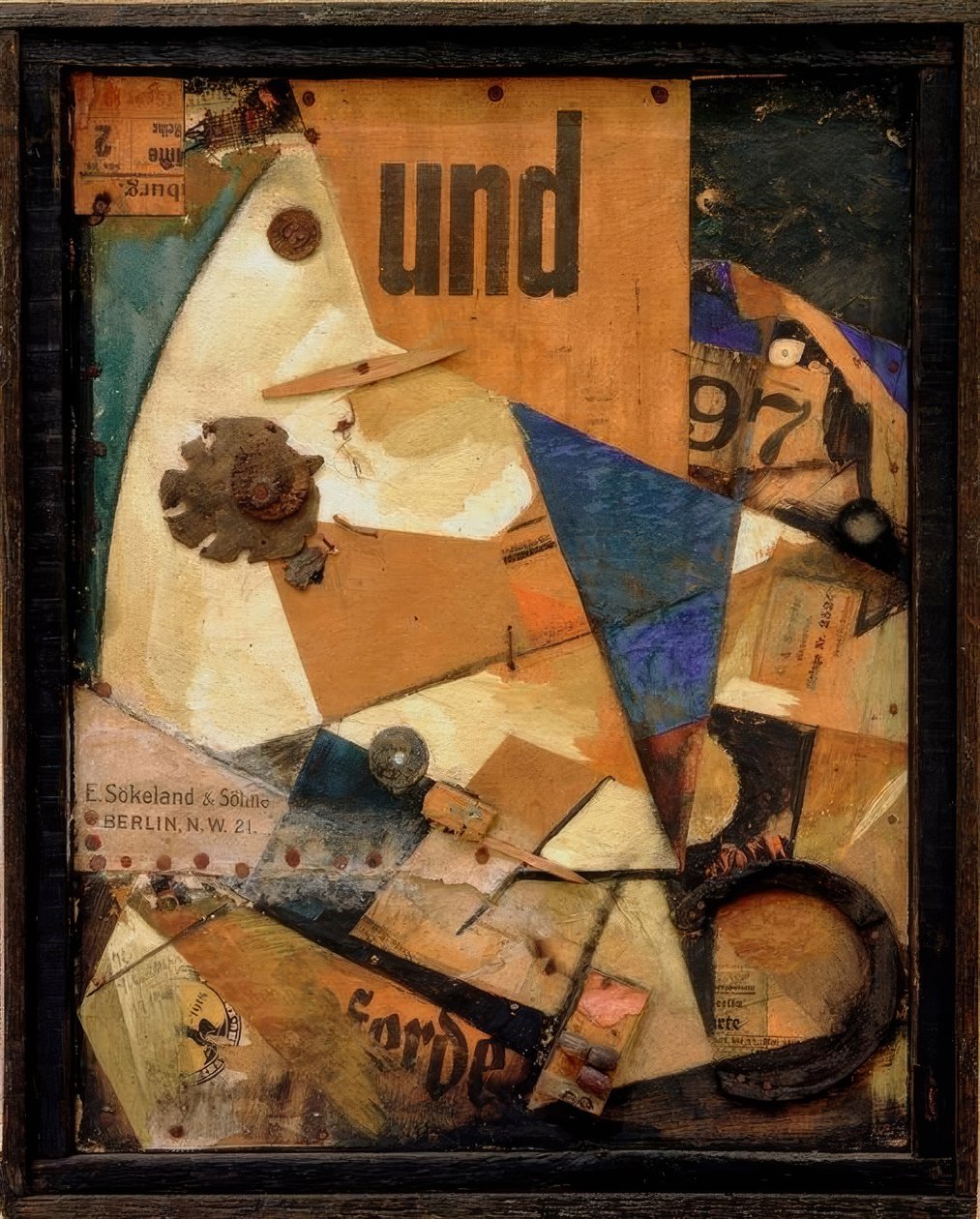
By varying the weight, size, and style of the type, they forced the reader to interpret the words vocally—turning a printed poem into a visual shout. Harmony, symmetry, and legibility were deliberately discarded in favor of piercing, dynamic, and fragmented words. The page was no longer a container for information; it was a visual expression of noise, anger, and the fractured human psyche.
While the artists in Zurich were fracturing typography, the Dadaists in Berlin were inventing an entirely new graphic medium. Enter John Heartfield and his revolutionary use of the photomontage.
Before Dada, graphic design relied heavily on traditional illustration to convey imagery. But the Berlin Dadaists realized that they were living in an era of mass media and photographic propaganda. If they wanted to attack the establishment, they needed to use the establishment’s own visual language against it.
Weaponizing scissors and glue, Heartfield and his contemporaries began cutting up the very photographs and newspapers that the government used for propaganda, reassembling them into jarring, surreal compositions.
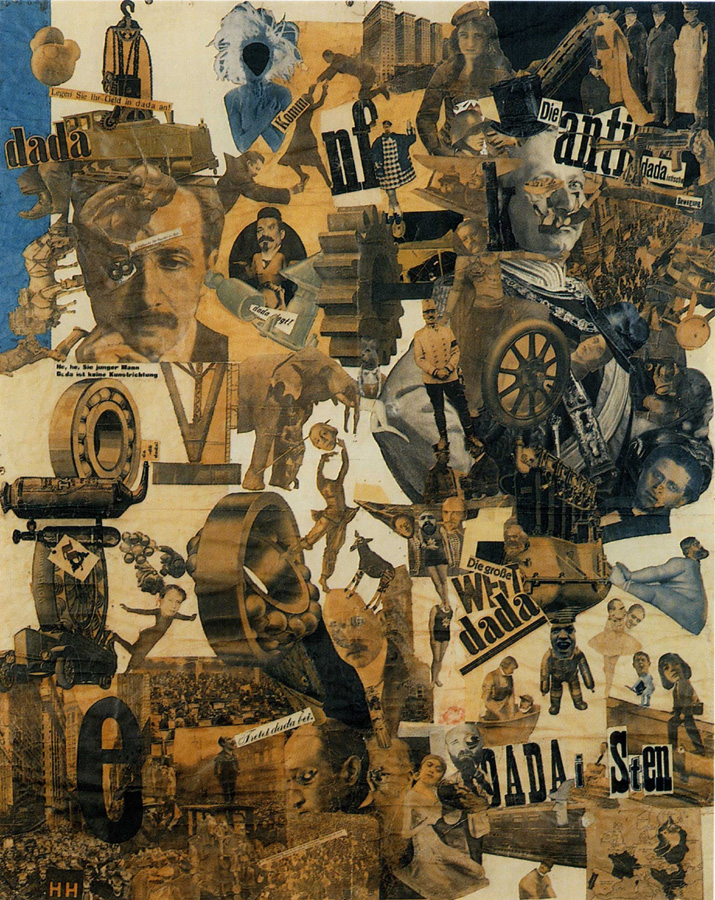
Heartfield pioneered the biting, political use of the photomontage. He proved that by splicing real photographs together, a designer could create a devastatingly effective visual lie that paradoxically revealed a deeper political truth.
One of his most famous and impactful works appeared in the magazine AIZ in 1930. Heartfield created a surreal image of a man’s head entirely wrapped in pages of newspaper, with the piercing headline: “Whoever reads the bourgeois press turns blind and deaf. Away with the stultifying bandages!”
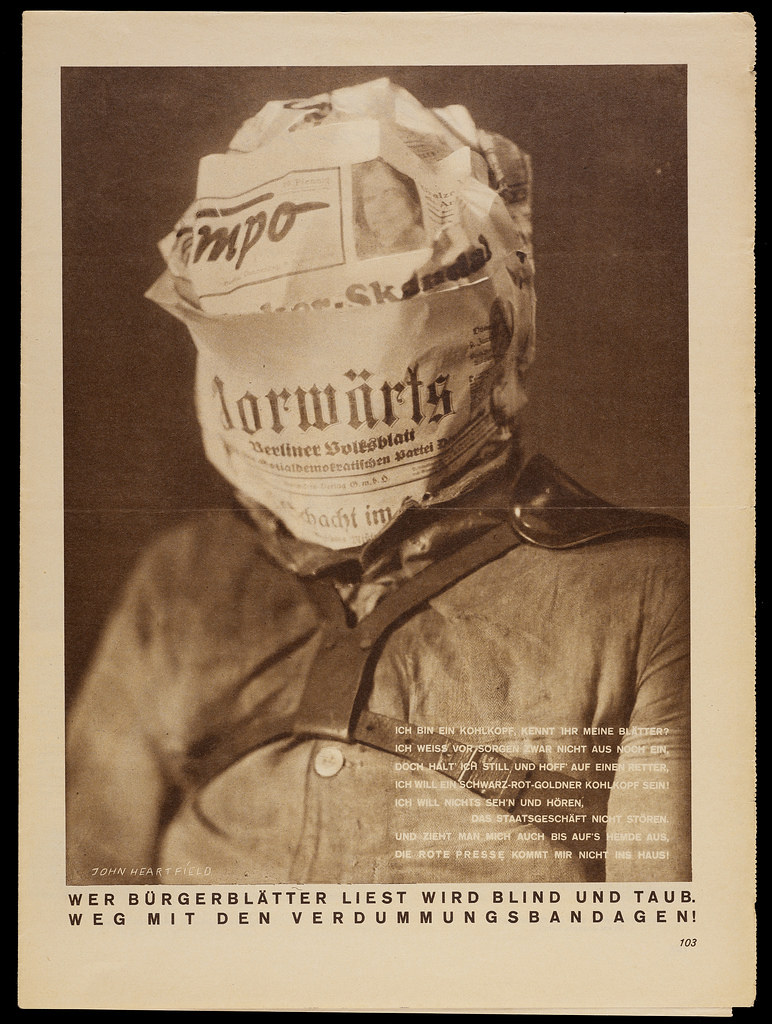
It was a masterful, confrontational attack on the media, proving that Dada was not merely random silliness. It was a highly skilled, razor-sharp tool for political communication. Photography had officially become a graphic design element that could be endlessly manipulated to challenge reality itself.
As a formal movement, Dada was relatively short-lived, flaming out shortly after the end of the war. But its impact on the history of graphic design was permanent.
Dada completely freed graphic designers from the rigid, historical rules of the page. It proved that confrontational, unbalanced, and jarring layouts could capture human attention and convey raw emotion far better than a “perfect,” symmetrical design. Modern punk zines, grunge music posters, and layered digital collages trace their rebellious roots back to the brave, traumatized artists of the Dada movement who first dared to break the grid.
Humanity cannot live in pure chaos forever. Dada successfully destroyed the old, suffocating rules of 19th-century design, leaving behind a completely blank slate. But society eventually needed to rebuild.
In our next post, De Stijl and Constructivism: Rebuilding the World, we will see how a new wave of visionary designers attempted to build a brand new, universal, and incredibly powerful visual order out of the ashes of this destruction.
In the post-war era, American businesses rapidly evolved into massive multinational corporations that demanded rigorous visual order. Explore how modernist...
Following the strict, functional rules established by the Bauhaus, the Roaring Twenties demanded a visual language that was fast, luxurious,...
Following the chaos of World War I, Walter Gropius founded the Bauhaus to rebuild society through a unified approach to...
During the global conflicts of the 20th century, graphic design was mobilized as a powerful weapon of mass communication. Explore...
Rejecting the elite concept of "art for art's sake," the Russian avant-garde transformed abstract geometry into a tool for mass...
Emerging from the psychological wreckage of World War I, the Dutch De Stijl movement sought to build a utopian society...
Traumatized by the senseless slaughter of World War I, a rebellious group of anti-war artists completely rejected the harmonious design...
By the 1890s, graphic design was lost in a tangled, organic forest of twisting vines and dense Victorian clutter. Discover...
If you open your font menu today, you are looking at centuries of design history. Discover how the raw, heavy...

Long before Gutenberg developed the printing press, the foundations of the modern page were being masterfully engineered in the East....
In the tumultuous early 20th century, marked by a whirlwind of new inventions and a shift from agrarian to urban...
As the twentieth century unfolded, emerging artists sought inspiration beyond the intricate designs of the Victorian era, Art Nouveau, and...
The Art Nouveau movement, which flourished in the late 19th and early 20th centuries, was characterized by its ornamental and...
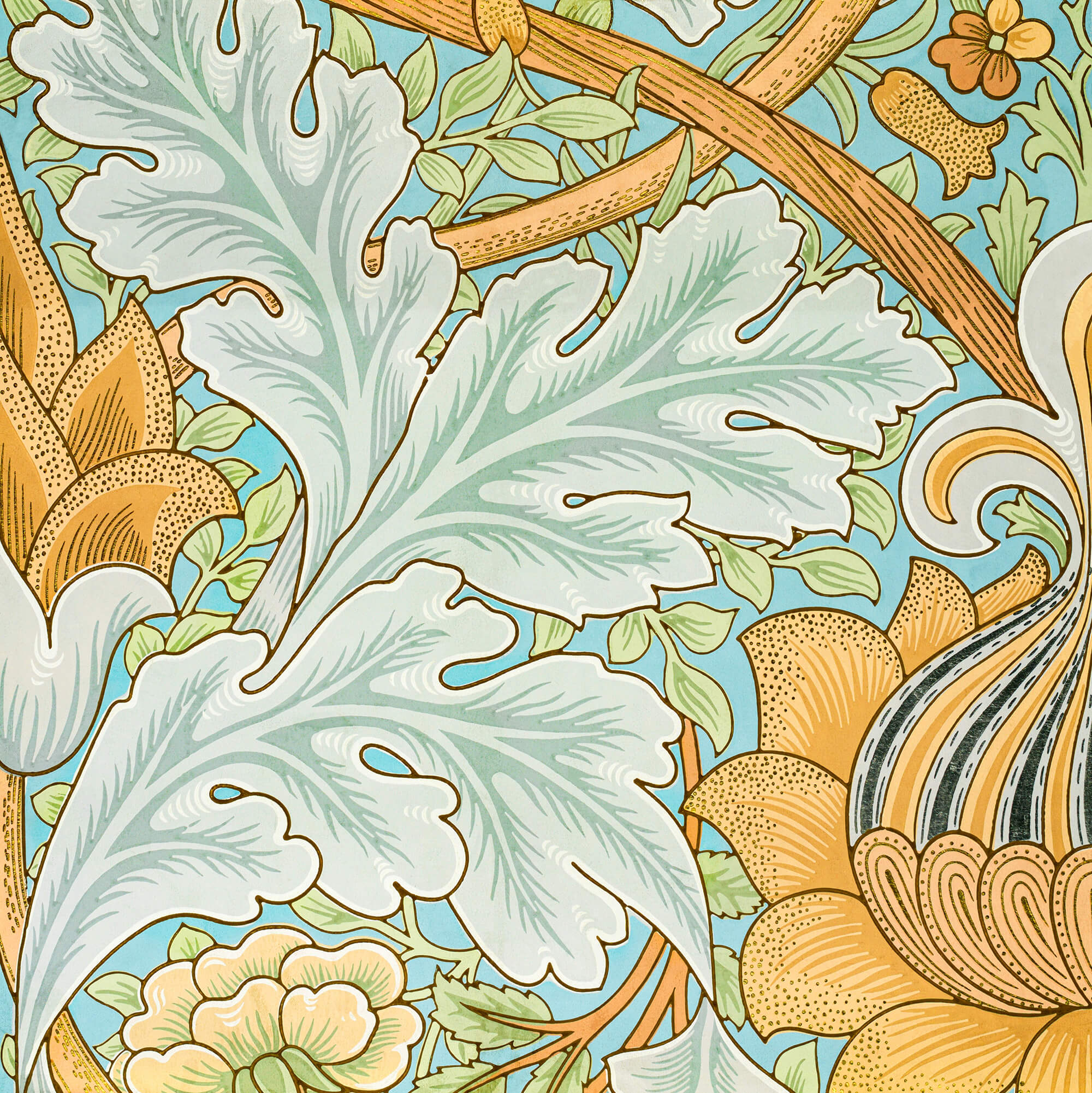
As the 19th century unfolded, the city of Paris became a hotbed of optimism and creativity, fueled by a confluence...
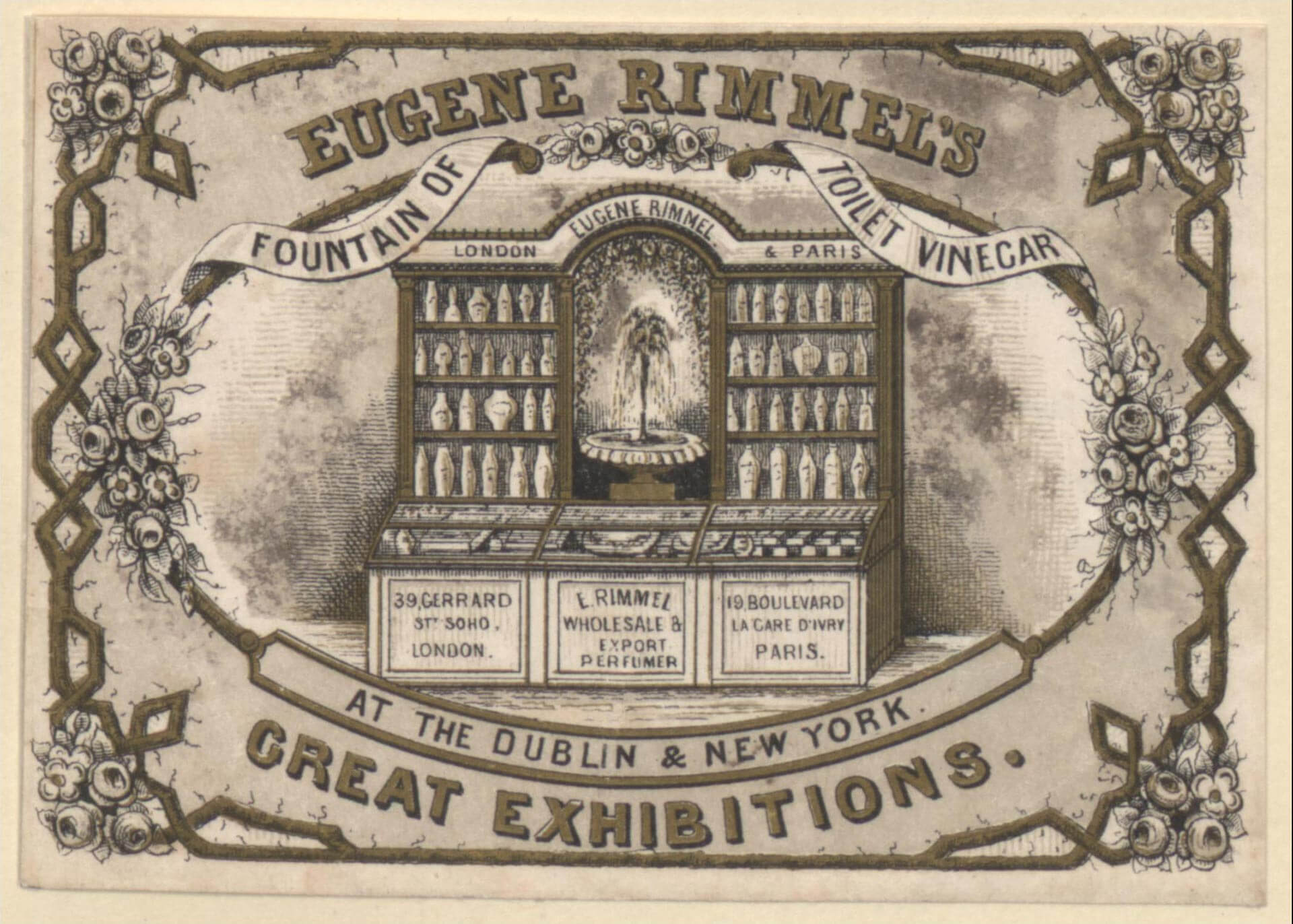
In the mid to late 19th century, the technological change was a big driving force, just like today. The new...
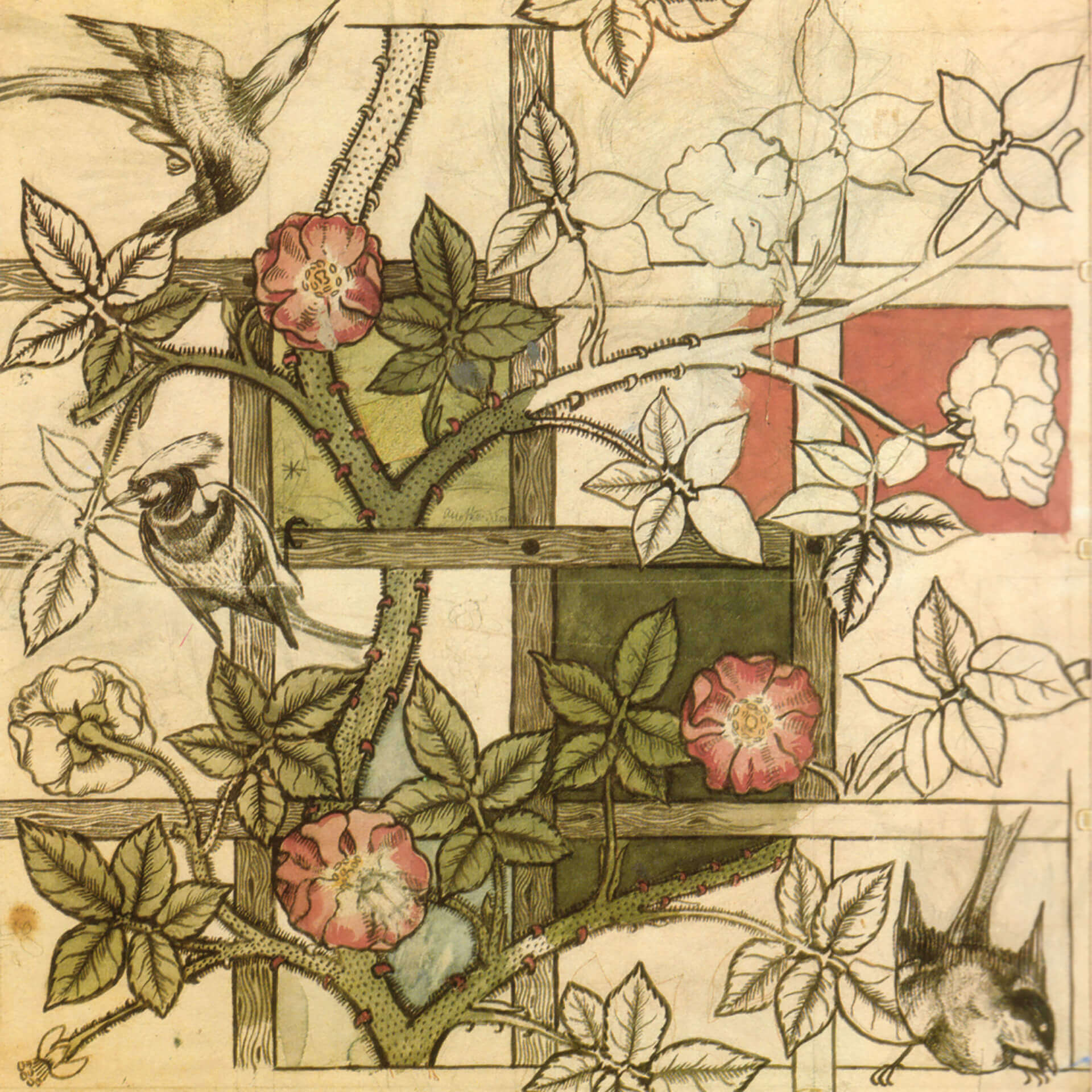
While these developments were happening, the deskilling of the craftsman and manufacturing of mass-produced items, expansion of factories and even...
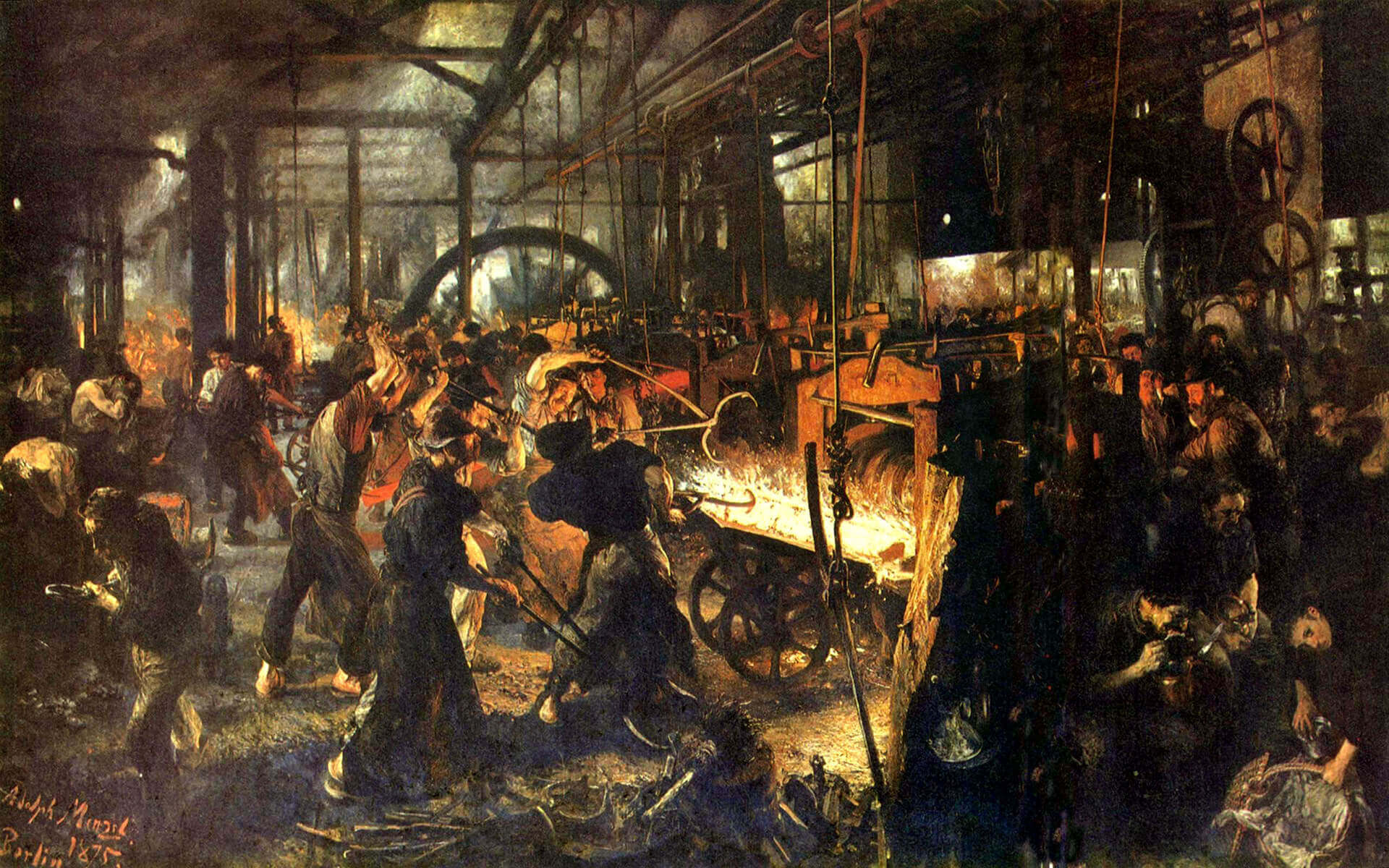
Before industrialization, things were made in small numbers, carrying the emotions and fingerprints of its creator as a result of...
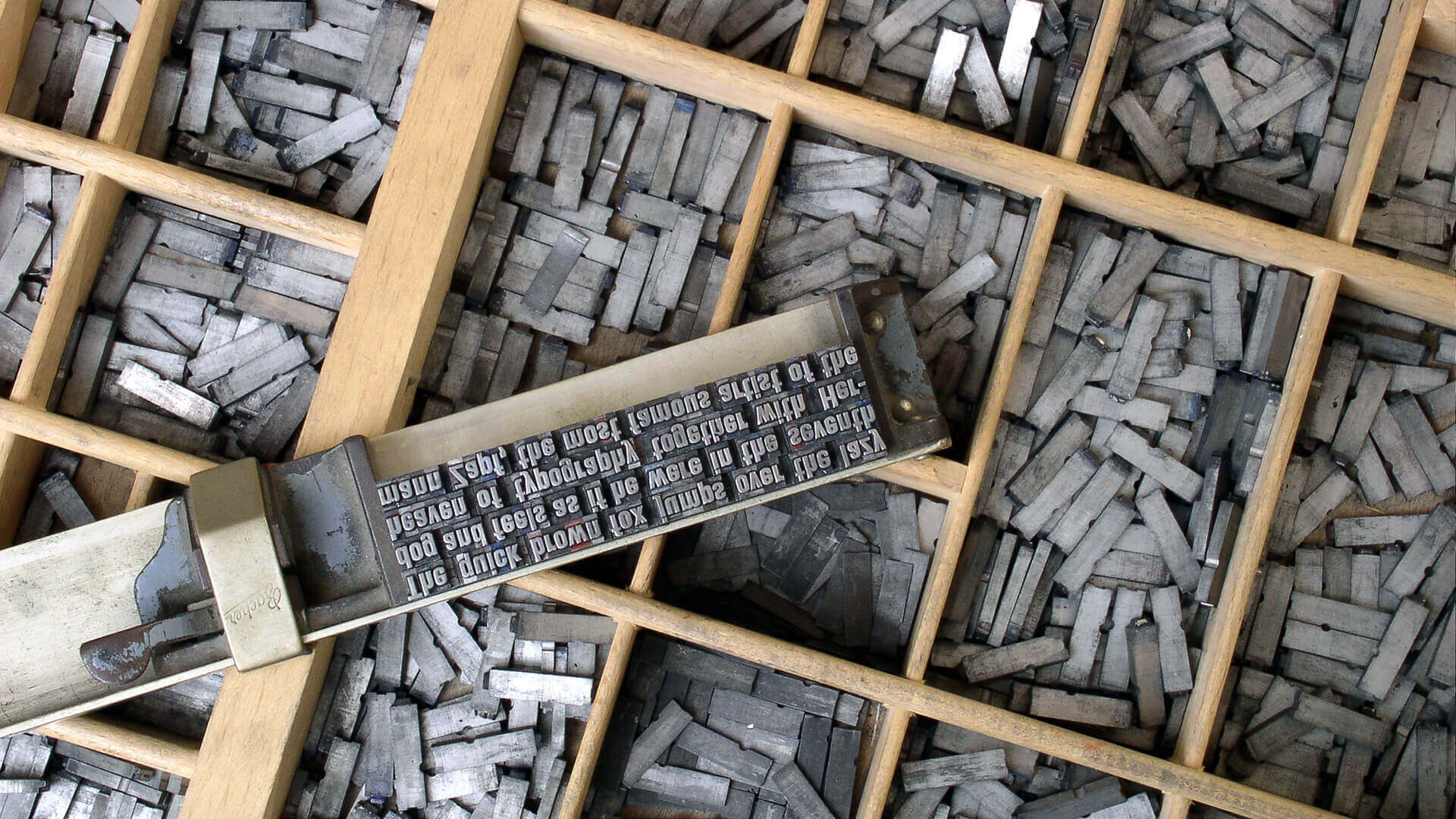
In 1400s AD, after several years of focused experiments, Johannes Gutenberg made the system scalable and led the way for...

The history of graphic design begins with the cave paintings. The prehistoric humans were marking their daily lives or the...

Starting from a simple stone ax, throughout the history we created a man-made environment, to survive and control the world...